Magnesium Extrusion: Lightweight Metal for Advanced Applications
In engineering, reducing weight without compromising strength is never a simple trade-off.
Every material responds differently. Every process changes how that material behaves. And sometimes, the real advantage does not come from the material itself, but from how it is shaped.
This is where magnesium extrusion becomes particularly interesting.
Magnesium is already known for its low density and high strength-to-weight ratio, making it one of the lightest structural metals available. But it is through extrusion that its full potential can be realized.
The process itself is precise and controlled. Magnesium alloys are pushed through a custom die, creating components with a defined cross-section and consistent geometry along their length. What emerges is not just a shape, but a structure with predictable behavior, optimized for both strength and weight.
Compared to other manufacturing methods, extrusion offers a unique balance. It allows the creation of complex profiles while maintaining tight tolerances and a refined surface finish. At the same time, the internal structure of the material remains continuous, contributing to improved mechanical performance.
This combination makes extruded magnesium particularly suitable for applications where efficiency matters.
In sectors such as aerospace, automotive, and advanced mechanical systems, reducing weight is directly linked to performance. Less mass means better responsiveness, easier handling, and lower energy requirements. At the same time, structural integrity cannot be compromised.
Magnesium extrusion addresses both aspects.
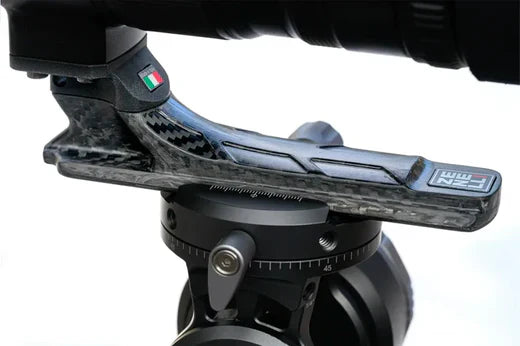
It enables lightweight components that remain strong and reliable under load, while also allowing precise machining for interfaces and critical surfaces. This is essential in applications where alignment, stability, and repeatability are required.
There is also a broader perspective to consider.
Magnesium is a recyclable material, and its efficient use through extrusion supports more sustainable manufacturing approaches. As processes evolve and applications expand, this combination of performance and efficiency becomes increasingly relevant.
What defines magnesium extrusion is not just its ability to produce lightweight parts.
It is the way it allows engineers to control the relationship between form, structure, and performance.
Because in advanced applications, the real advantage is not simply reducing weight.
It is knowing exactly where that weight can be removed, and where it must remain.