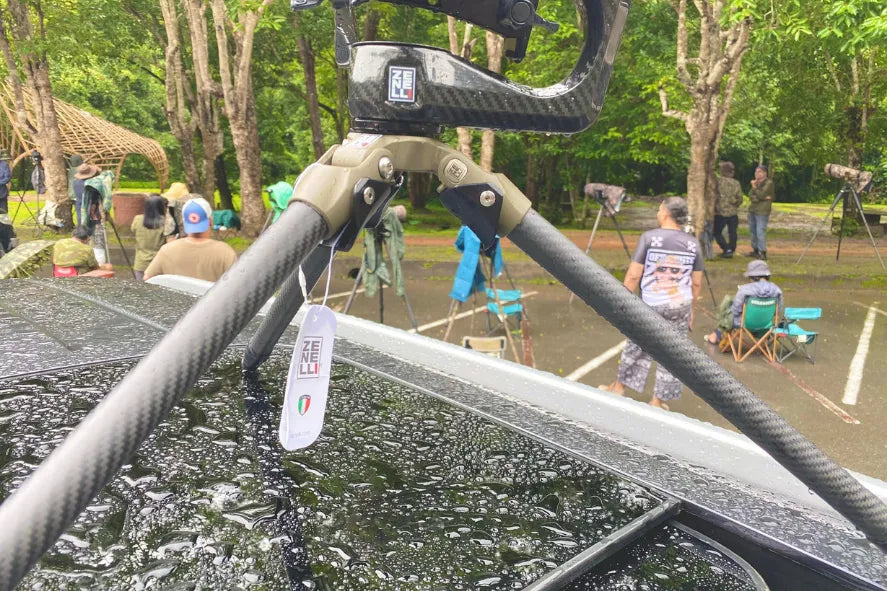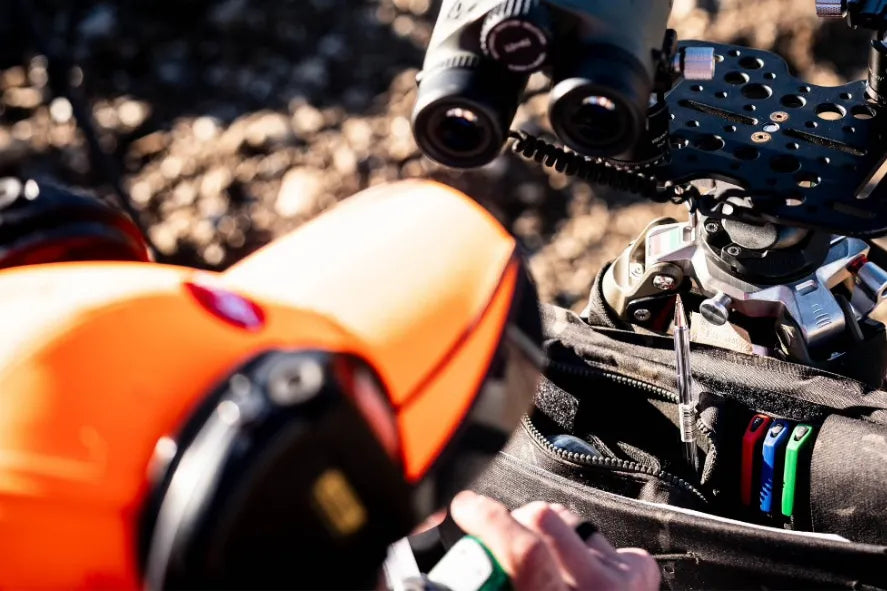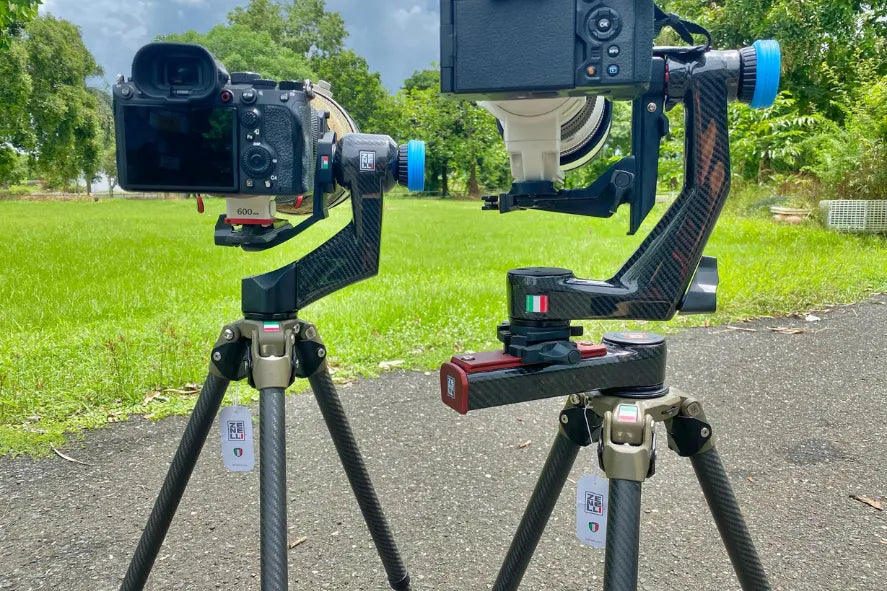
Zenelli®: Camera Support Systems Designed for Professional Telephoto Photography
Photography equipment is often compared through specifications.
Weight, maximum load, dimensions and materials are useful information, but they do not completely describe how a support system will behave with a large telephoto lens in real working conditions.
Zenelli® develops tripods, gimbal heads and camera support components specifically around these mechanical requirements.
The objective is not to design equipment for every photographic application. It is to develop specialized support systems for photographers who place particular importance on stability, controlled movement, low weight and precision engineering.
Designed for Telephoto and Super-Telephoto Photography
Long telephoto lenses create specific demands on a support system.
Their mass needs to be supported, but maximum load capacity is only one part of the problem.
The dimensions and weight distribution of the equipment influence balance. Long focal lengths make small movements increasingly relevant. Wildlife and sports photography also require the camera and lens to move quickly and predictably when following a subject.
For this reason, Zenelli equipment is developed primarily around the requirements of photographers working with telephoto and super-telephoto lenses.
Load Capacity Is Only One Specification
A tripod or head capable of supporting a particular static load is not automatically the most appropriate support for that equipment.
Two systems with similar maximum-load specifications can behave differently because of their geometry, materials, joints, bearings, leg dimensions and locking mechanisms.
With a tripod, tube diameter, number of sections, working height and leg architecture all contribute to structural behaviour.
With a gimbal, balance range, bearing configuration, rigidity and friction control influence how the camera and lens move.
Zenelli therefore evaluates support equipment as a complete mechanical system rather than designing around a single headline specification.
Stability Comes from the Complete Structure
No individual material can guarantee stability.
Carbon fiber, aluminum and magnesium each have different properties, but the behaviour of the finished product depends on how those materials are used.
Geometry, cross-sections, interfaces, tolerances and connections between components are equally important.
The same principle applies to vibration.
Rather than attributing vibration performance to carbon fiber or another material alone, Zenelli approaches it as a characteristic of the complete camera support system.
The tripod, head, lens foot, clamps and mounted equipment all contribute to its dynamic behaviour.
Controlled Movement Matters
A support system for wildlife photography cannot simply be rigid.
It also needs to allow movement when the photographer needs to follow a subject.
This is particularly important with gimbal heads.
When a camera and telephoto lens are correctly balanced around the tilt axis, the gimbal supports their weight while allowing controlled pan and tilt movement.
The photographer can therefore follow wildlife or sports subjects without continuously supporting the full weight of the equipment by hand.
For this type of photography, stability and movement are not opposing requirements. The support system needs to manage both.
Lightweight Does Not Simply Mean Smaller
Reducing weight is valuable when photographers need to walk long distances or repeatedly transport a tripod and telephoto setup.
But minimum weight cannot be the only design objective.
Removing material can affect rigidity. Reducing tube diameter can change structural behaviour. Adding additional telescopic sections can improve packed dimensions while introducing more interfaces into the leg structure.
Lightweight engineering therefore requires compromise and optimization.
Zenelli uses carbon fiber and lightweight metal alloys where their characteristics can contribute to reducing mass while satisfying the mechanical requirements of the component.
Precision at the Interfaces
A photographic support system contains numerous mechanical connections.
The lens connects to the lens foot. The lens foot connects to the clamp. The head connects to the tripod. Bearings, locking mechanisms and adjustment systems operate between structural components.
These interfaces are critical because movement or dimensional inconsistency at one connection can influence the behaviour of the complete assembly.
For this reason, precision manufacturing and controlled tolerances are fundamental parts of the Zenelli design approach.
Designed for Field Conditions
Professional photographic equipment is rarely used only in controlled environments.
Wildlife photographers work around dust, moisture, vegetation, uneven terrain and changing temperatures. Equipment is transported, deployed, adjusted and packed repeatedly.
These conditions are considered during the development of Zenelli support systems.
Protection of internal mechanisms, material selection, surface treatments, serviceability and the accessibility of controls all contribute to how practical a product remains outside the studio.
No tripod or head is immune to environmental exposure, and correct maintenance remains important. The objective is to design equipment around the reality that field use is demanding.
Engineering and Manufacturing in Italy
Zenelli develops its photographic support equipment in Italy, maintaining a close relationship between product engineering and manufacturing.
This connection allows machining, materials, assembly and product behaviour to be considered during development rather than as independent stages.
For a specialized product, this is particularly useful because improvements can originate from manufacturing experience, testing or feedback from photographers and return directly to the engineering process.
Who Is Zenelli Designed For?
Zenelli is primarily designed for photographers who use demanding telephoto equipment and consider the support system an important part of their photographic setup.
This includes wildlife, bird and sports photographers working with long telephoto and super-telephoto lenses, as well as professionals who need lightweight support equipment for extended field use.
For other types of photography, different priorities may lead to different equipment choices.
A photographer working primarily with a lightweight camera and short lenses, for example, may place greater emphasis on minimum size or cost than on the structural characteristics required for a large telephoto system.
There is no single support system that is ideal for every photographer.
Specialized by Design
Zenelli does not need to be the right choice for every photographic application.
Its products are developed around a more specific objective: supporting photographers who need to combine long lenses, controlled movement, structural rigidity and portability in real field conditions.
That specialization influences the materials, geometry, manufacturing and mechanical architecture of the equipment.
Zenelli is not designed around the widest possible range of photographers. It is designed around the specific requirements of professional telephoto and super-telephoto photography.