In Search of the Alpine Ibex in Gran Sasso National Park
A Wildlife Photography Journey in the Italian Mountains
Wildlife photography in the mountains begins long before the animal appears.
At high altitude, terrain, weather, distance and accessibility determine how the photographer can move and where equipment can be positioned. A location that appears close across a valley may require a long approach, while steep slopes and exposed rock can make even small changes of position difficult.
In this environment, preparation and observation become as important as the photograph itself.
Searching for Wildlife in the Mountains
Mountain wildlife photography requires a different approach from working in more accessible environments.
Visibility can extend for kilometres, but animals can still be difficult to locate among rocks, vegetation and changing light.
Instead of moving continuously, it can be more effective to stop and observe the landscape carefully.
Small movements against a distant ridge, changes in silhouette or activity along a slope can reveal an animal that initially appeared almost invisible.
Finding the subject is often the first challenge.
Photographing Ibex at a Distance
Once an ibex is located, distance becomes an important part of the photographic approach.
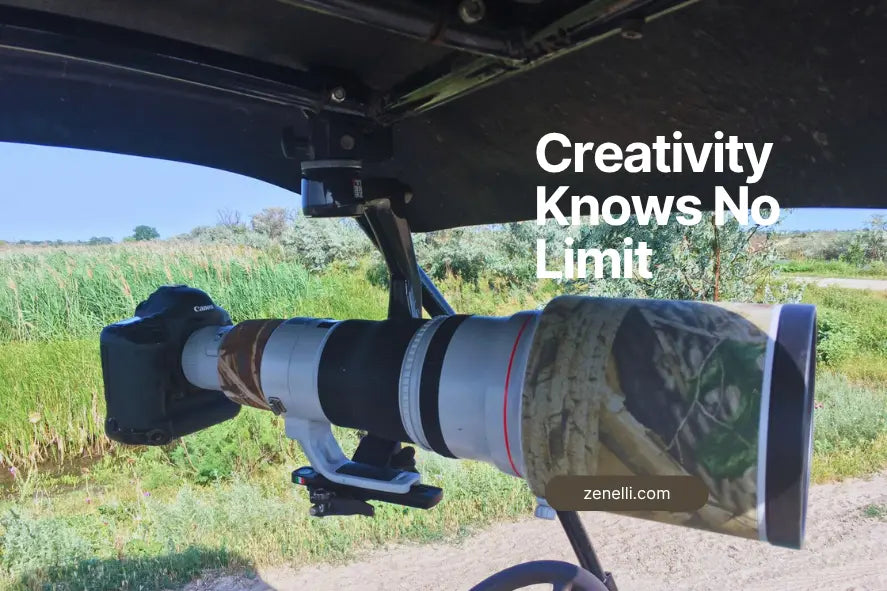
Telephoto and super-telephoto lenses allow the photographer to frame distant wildlife while maintaining separation from the subject.
This is particularly important in mountain environments, where approaching an animal may require crossing difficult terrain and can create unnecessary disturbance.
A longer focal length allows the photographer to work with the distance rather than constantly trying to reduce it.
Uneven Terrain Changes the Setup
A tripod positioned on a mountain slope rarely stands on a perfectly level surface.
Each leg may need a different extension, and rocks can limit where the feet can be placed securely.
The objective is not simply to make the camera level.
The complete support system needs a stable position before a large telephoto lens is mounted and moved above it.
Keeping the tripod only as high as necessary can also provide a more controlled working position when terrain or wind makes conditions difficult.
Wind Is Part of Mountain Photography
Wind can change quickly at altitude.
A large telephoto lens presents a significant surface area, and gusts can introduce movement even when the tripod itself is rigid.
The photographer therefore needs to consider the complete system: tripod position, leg extension, camera height, lens orientation and personal stance.
No support system can eliminate the forces created by strong wind.
The objective is to reduce unnecessary movement and maintain as much control as conditions allow.
Carrying Equipment to the Location
Before stability becomes important, the equipment has to reach the shooting position.
Mountain photography often involves carrying a camera, telephoto lens, tripod, head and additional equipment over significant distances and elevation changes.
This makes the relationship between weight and structural performance particularly relevant.
Reducing unnecessary mass can make the approach easier, but a support system still needs sufficient rigidity for the equipment being used.
The lightest solution is not automatically the most appropriate one.
Using a Gimbal Head in Mountain Terrain
A gimbal head can be particularly useful when working with large telephoto lenses from a relatively fixed position.
Once the camera and lens are correctly balanced, the gimbal allows controlled movement in pan and tilt while the tripod supports the weight of the equipment.
This means the photographer can follow an ibex moving across a slope without continuously supporting the complete mass of the camera and lens.
The tripod provides the base. The gimbal manages the movement above it.
The Zenelli Approach
Zenelli carbon fiber tripods and gimbal heads are developed for photographers working with telephoto equipment in outdoor environments.
In mountain photography, low equipment weight can help during the approach, while rigidity and controlled movement become important once the shooting position is reached.
A carbon fiber tripod combined with a correctly balanced gimbal creates a support system designed around these two different phases of the experience: carrying the equipment and using it.
The objective is not to remove the challenges of the environment, but to provide equipment that remains predictable within them.
Respecting the Subject and the Environment
The photograph should never require unnecessary pressure on wildlife.
Telephoto lenses provide an important advantage because they allow photographers to maintain distance while still creating detailed images.
Observing behaviour is equally important.
If an animal changes its behaviour because of the photographer's presence, increasing the distance or changing position may be necessary.
Mountain environments also require particular attention to paths, protected areas and local regulations.
Wildlife photography depends on access to these environments, making responsible behaviour part of the photographic process.
More Than a Wildlife Portrait
An ibex does not need to fill the frame for the photograph to communicate something meaningful.
Rock faces, ridges, changing weather and open mountain space describe the environment in which the animal lives.
Sometimes a wider composition can communicate this relationship more effectively than a tightly framed portrait.
The subject becomes part of the landscape rather than separated from it.
Wildlife Photography in the Italian Mountains
Photographing mountain wildlife combines physical preparation, observation and technical control.
The approach may take hours. The weather can change. The subject may remain distant or disappear before the camera is ready.
There are no guarantees.
When the opportunity finally arrives, the photographer needs to work with the terrain and conditions rather than against them.
In mountain wildlife photography, the equipment helps create the opportunity, but patience, distance and respect for the environment determine how that opportunity is used.