Forged Carbon Lens Foot for Sony FE: Inside Our R&D Exploration
In the Zenelli lab, every project starts the same way.
Not from a product idea, but from a question.
What happens if we change the material?
What happens if geometry follows a different logic?
What happens if the process itself becomes part of the design?
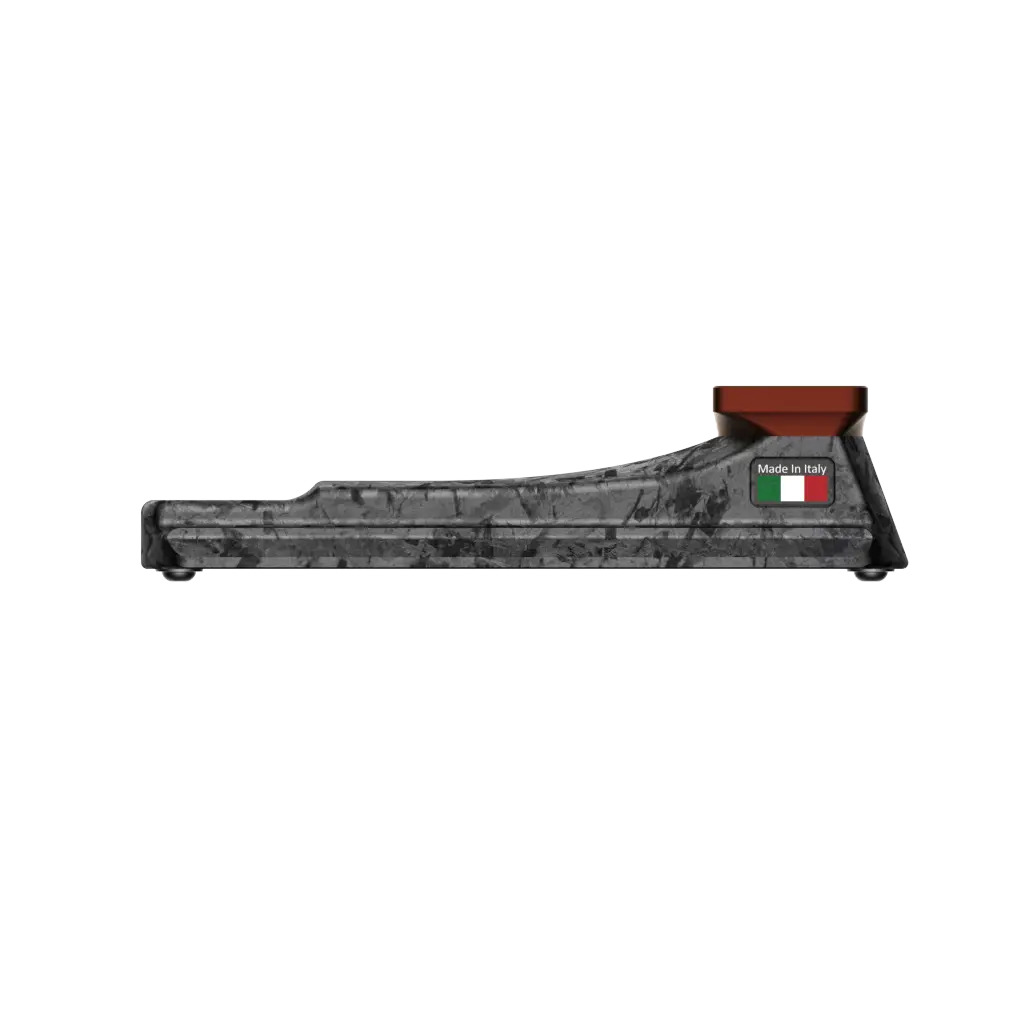
This time, those questions led us toward something new. A forged carbon lens foot, developed for Sony FE telephoto lenses.
Forged carbon is a different material language compared to the long-fiber composites we have worked with for years. It does not replace them. It behaves differently, responds differently, and opens directions that are not available with traditional layup structures.
For a brand built around engineering and experimentation, that difference is where things become interesting.
This project is not driven by performance claims. It is driven by curiosity. The goal is to understand how forged carbon behaves under load, how it interacts with precision interfaces, and how it can be integrated into a system where stability, weight, and repeatability are critical.
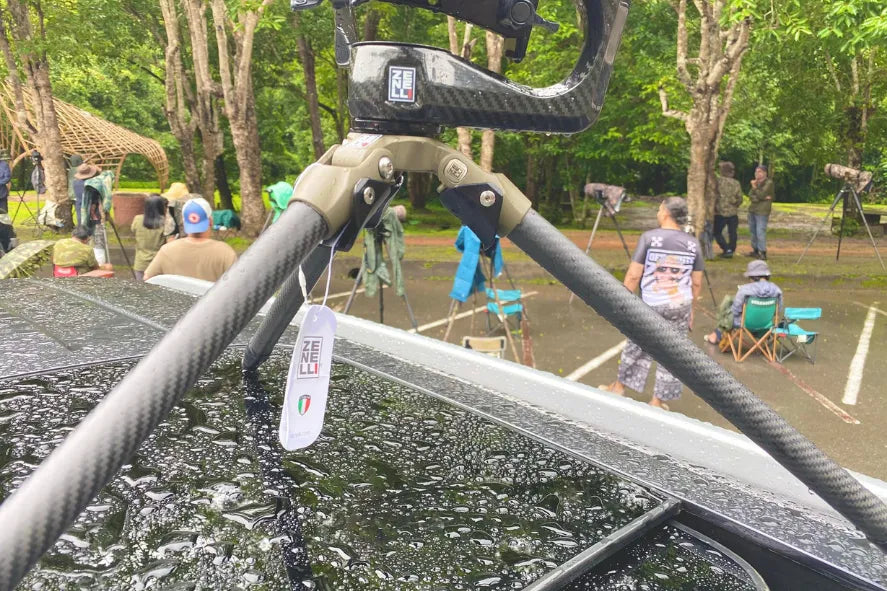
A lens foot may seem like a small component, but in practice it defines how the entire system connects to the support. It influences alignment, rigidity, and the way forces are transferred between lens and tripod head. It is a structural element.
Working with forged carbon in this context introduces new variables. The internal fiber structure is no longer directional, but distributed. This changes how the material reacts to stress and allows for geometries that would be difficult or inefficient with traditional composites.
It is not better or worse. It is different. And understanding that difference is the purpose of this exploration.
The current prototype is designed for a selection of widely used Sony FE telephoto lenses, typically found in wildlife, sports, and outdoor photography. These are environments where stability is not theoretical, but immediate. Where the interface between lens and support must remain precise under load, over time, and in changing conditions.
The design follows a familiar approach. Clean geometry, precise Arca-type interface, and a form that integrates naturally with the lens. At the same time, the material introduces a new visual and tactile identity, something that reflects the experimental nature of the project.
This is not a product announcement.
It is a research path.
There are no release timelines, no promises attached. Only a process of observation and testing. How the material behaves under pressure. How it responds to machining and finishing. How it performs in real-world use.
Because innovation, in this context, is not about introducing something new quickly.
It is about understanding it deeply.