Carbon TS: Tripod for NRL Precision Shooting
In NRL-style precision shooting, a tripod is more than a platform for supporting equipment.
It becomes part of the shooting position.
The shooter may need to move between stages, deploy the tripod quickly, adapt it to uneven terrain and establish a repeatable support position within a limited amount of time.
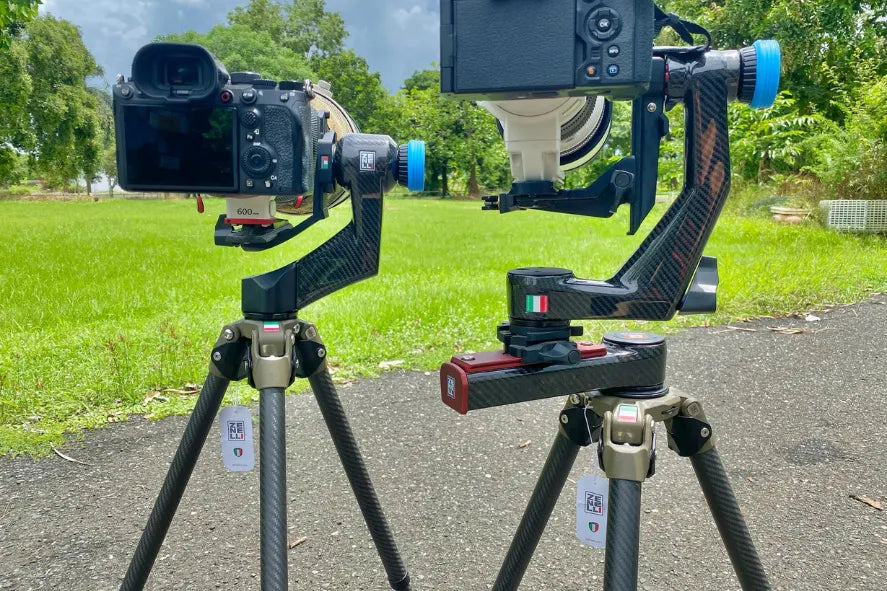
The Zenelli Carbon TS is designed around these requirements, combining a carbon fiber structure with a leg architecture developed for rapid deployment and field use.
What Does a Precision Shooting Tripod Need to Do?
A shooting tripod has different priorities from a conventional photographic tripod.
Portability remains important, but the tripod also needs to provide a stable interface when the rifle is supported from different positions and heights.
Deployment speed, leg positioning, structural rigidity and ease of adjustment can all influence how efficiently the shooter establishes a position.
For this reason, maximum load capacity alone does not describe whether a tripod is suitable for precision shooting.
The behaviour of the complete structure matters.
Designed for NRL-Style Field Use
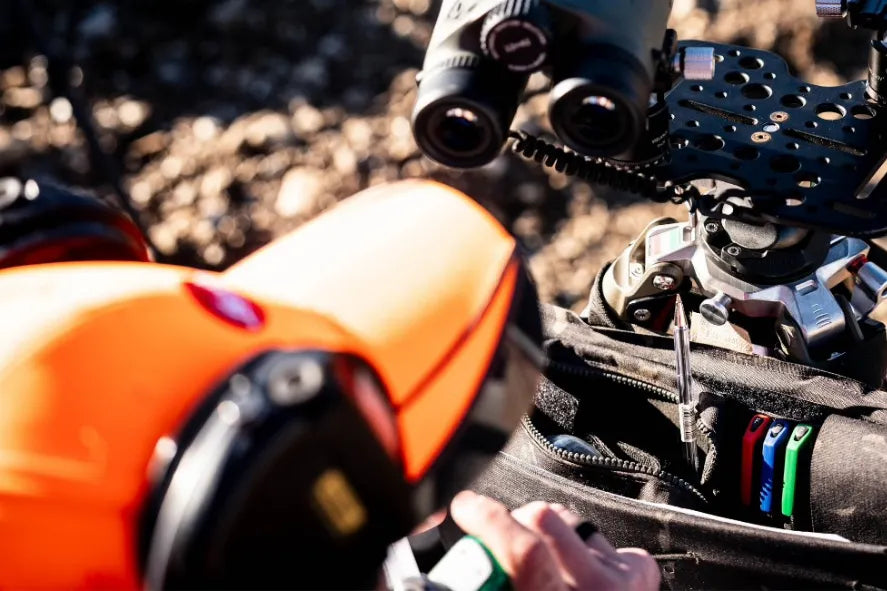
NRL-style stages can require shooters to transition between positions and work from terrain that does not provide a perfectly level surface.
A tripod intended for this environment needs to adapt without requiring a complicated setup procedure.
The Carbon TS was developed with this type of field operation in mind.
Its geometry and controls are designed to make the tripod straightforward to deploy, position and adjust when time and terrain are part of the challenge.
Reverse-Opening Leg Architecture
One of the defining characteristics of the Carbon TS is its reverse-opening leg system.
The architecture allows the legs to move rapidly from their transport position into the working configuration.
This approach is particularly useful when the tripod needs to be deployed repeatedly during a stage or moved between different shooting positions.
Rather than treating deployment as a secondary consideration, the leg-opening system makes it part of the fundamental tripod design.
Stability Is More Than Maximum Load
A tripod can support a heavy static load and still behave differently when lateral or torsional forces are introduced.
For a shooting support, structural behaviour depends on the complete system.
Leg diameter, tube construction, section interfaces, locking mechanisms, stance and working height all contribute to the rigidity of the tripod.
The way the tripod is positioned on the terrain is equally important.
The Carbon TS is therefore designed around the complete structural platform rather than around maximum load capacity as an isolated specification.
Carbon Fiber and Structural Efficiency
Carbon fiber is used in the Carbon TS where its stiffness-to-weight potential can provide an advantage.
A field tripod needs sufficient structural rigidity while remaining practical to transport between positions.
The objective is not simply to make the tripod as light as possible.
Tube geometry, laminate construction and the interfaces between leg sections all need to work together to provide the required mechanical behaviour.
Carbon fiber is one element of that structure, not a substitute for structural design.
Working on Uneven Terrain
Natural terrain rarely provides three identical contact points.
Differences in ground height, slope and surface conditions mean that each tripod leg may need to operate at a different extension.
Independent leg positioning allows the shooter to establish the tripod on irregular terrain while selecting a practical support height.
This flexibility is particularly relevant in field competitions, where the environment itself can influence how the shooting position is constructed.
Integrated Bubble Level
Establishing the tripod consistently also requires a clear reference to its orientation.
The Carbon TS incorporates a bubble level to provide an immediate visual reference during setup.
This allows the user to check the orientation of the support platform while adjusting the legs on uneven ground.
It is a simple feature, but one that becomes useful when the tripod is repeatedly repositioned during field use.
Integrated 3/8"-16 Accessory Interface
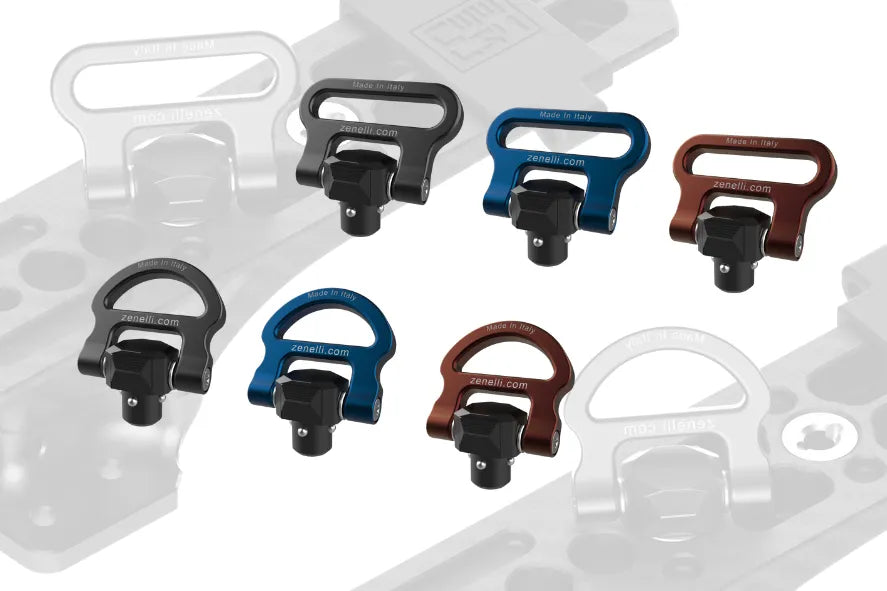
The Carbon TS includes a lateral 3/8"-16 mounting point for compatible accessories.
Integrating an accessory interface directly into the tripod creates additional configuration possibilities without requiring modifications to the main structure.
The tripod can therefore function not only as a support platform but as the foundation of a broader field setup according to the user's equipment requirements.
Repeatability Comes from the Complete Setup
A tripod can provide a consistent mechanical platform, but shooting accuracy depends on much more than the tripod itself.
Rifle configuration, ammunition, optics, environmental conditions, shooter technique and the way the firearm interfaces with the support all contribute to the result.
For this reason, the Carbon TS should not be described as improving accuracy by itself.
Its role is to provide a stable and repeatable support platform from which the shooter can work.
Designed for Repeated Field Operation
Dust, changing terrain and repeated deployment are normal conditions for equipment used outdoors.
The tripod therefore needs to remain practical not only for a single stage but throughout repeated use.
Leg mechanisms, interfaces and structural components are designed as parts of a complete field system, with particular attention to compact operation and straightforward adjustment.
As with any precision mechanical equipment used outdoors, appropriate inspection, cleaning and maintenance remain important.
Coyote Finish
The Carbon TS is available with the Coyote finish, giving the tripod an earth-toned appearance suited to outdoor environments.
The finish complements the field-oriented design of the tripod without changing its fundamental mechanical function.
A Platform Designed Around the Application
A precision shooting tripod should not be evaluated only by its weight or maximum load.
Deployment, geometry, rigidity, adjustment range, terrain adaptability and the interface with the rest of the equipment all determine how useful the tripod is in practice.
The Carbon TS brings these requirements together in a field-oriented carbon fiber tripod developed around NRL-style use.
The Zenelli Carbon TS is designed to provide a portable, rapidly deployable and structurally stable tripod platform for precision shooting in dynamic field environments.