Wildlife Photography on the Cliffs: Photographing Puffins in Flight
Coastal cliffs create some of the most dynamic environments for wildlife photography.
Wind, changing light, uneven terrain and fast-moving birds all influence the way a photographer works. Puffins add another challenge: they are relatively small, fly quickly and can change direction within seconds.
Photographing them successfully requires observation, anticipation and a support system that provides stability without restricting movement.
Photographing Puffins in Their Environment
Puffins spend much of their lives at sea, returning to coastal breeding areas where cliffs provide nesting sites and access to the ocean.
For photographers, these locations create opportunities to photograph very different types of behaviour.
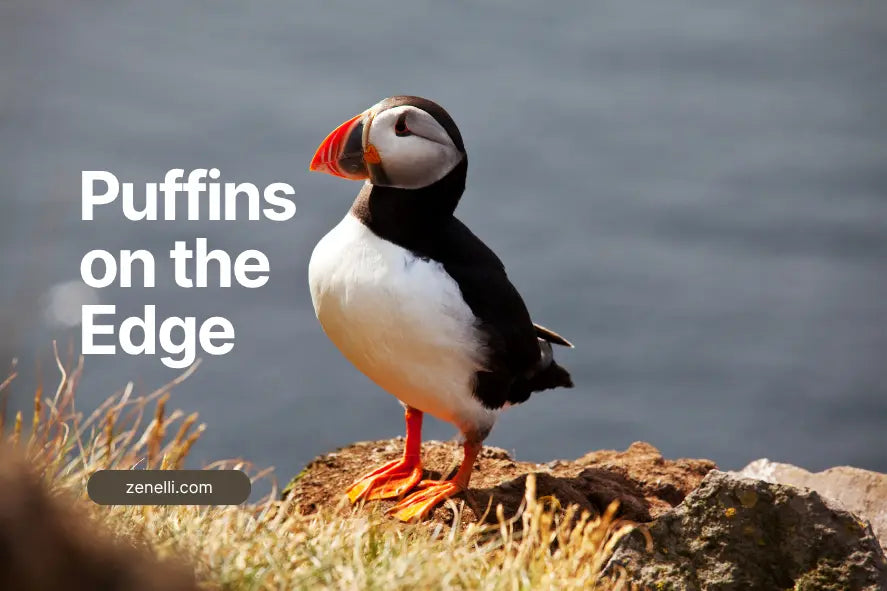
A puffin may remain almost motionless near its burrow and then suddenly launch from the cliff. Others return from the sea at speed, sometimes carrying fish, before disappearing into the colony.
The photographer may therefore need to move quickly between static portraits and fast flight photography.
Why Puffins in Flight Are Challenging
Following a large bird across an open sky can already require precise camera movement.
Puffins make the task more difficult because of their smaller size, speed and rapid changes in direction.
Through a long telephoto lens, the field of view becomes narrow. Once the bird enters the frame, the photographer needs to maintain a smooth movement while anticipating its trajectory.
Trying to correct every small movement independently can make tracking less consistent.
The objective is to follow the bird with one continuous movement rather than a sequence of abrupt corrections.
Anticipation Makes Tracking Easier
Successful flight photography often begins before the bird takes off.
Observing repeated flight paths can reveal useful patterns.
Puffins may approach the colony from similar directions, follow the coastline or use particular areas for landing and departure.
Wind direction can also influence their flight.
Spending time watching these patterns before concentrating on individual photographs can make it easier to anticipate where a bird may appear and how it is likely to move through the frame.
Stability Without Restricting Movement
A tripod can provide a stable platform for long telephoto equipment, but stability alone is not enough when photographing birds in flight.
The camera must also be able to move freely.
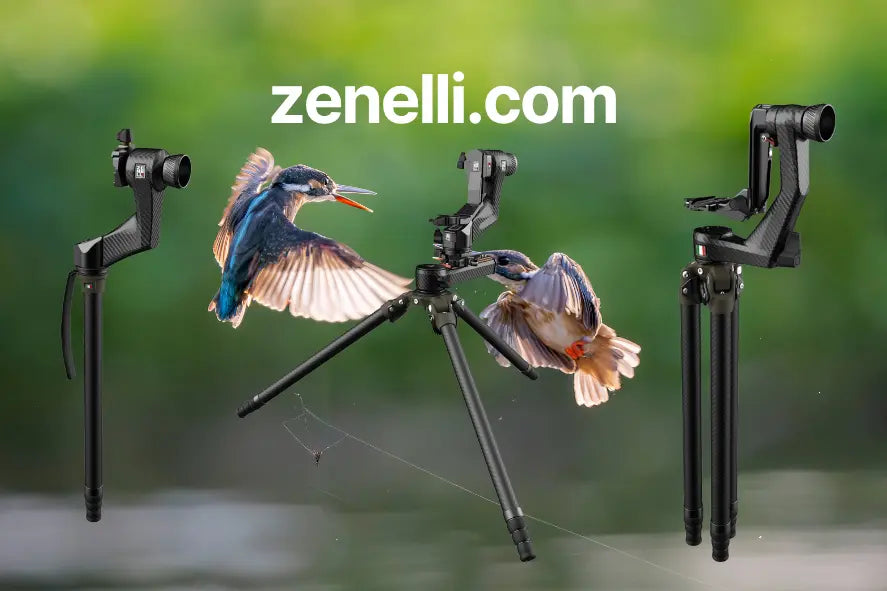
A correctly balanced gimbal head allows the camera and lens to rotate in pan and tilt while the tripod provides a stable base beneath the system.
This combination is particularly useful when the photographer remains in one location while repeatedly following birds moving through the same area.
The tripod provides support. The gimbal provides controlled movement.
Working in Coastal Wind
Wind is one of the defining characteristics of cliff photography.
It can affect the photographer, the lens and the complete support system.
Large telephoto lenses present a significant surface area to crosswinds, and even a rigid tripod cannot completely eliminate the forces acting on the equipment.
A practical approach is to keep the tripod only as high as necessary, position the legs securely and avoid unnecessary extension when conditions become difficult.
The photographer's position also matters. Maintaining a stable stance and controlling the lens smoothly can help prevent additional movement from being introduced into the system.
Choosing a Support System for Cliff Photography
The appropriate support depends on how the photographer intends to work.
If the shooting position remains relatively fixed, a tripod and gimbal combination can provide both support and freedom of movement.
If the photographer needs to move frequently along the coast, equipment weight becomes increasingly important.
Carbon fiber tripod structures and lightweight gimbal heads can reduce the total mass that must be carried between locations while still providing a support system designed for long telephoto equipment.
The objective is not simply to make the equipment as light as possible, but to find an effective balance between portability and structural performance.
The Zenelli Approach in the Field
Zenelli carbon fiber tripods and gimbal heads are developed for photographers working with telephoto and super-telephoto equipment in outdoor environments.
The tripod provides the structural base while the gimbal allows the camera and lens to follow moving subjects through controlled pan and tilt movements.
When the system is correctly balanced, the photographer can guide the lens rather than continuously support its full weight.
For subjects such as puffins, this becomes particularly useful during repeated tracking sequences where the camera may move continuously between sea, sky and cliff.
Respecting the Colony
Photographing puffins is not only a technical challenge.
Breeding colonies are sensitive wildlife environments, and the photograph should never take priority over the welfare of the birds.
Remaining on designated paths, respecting local restrictions and maintaining appropriate distance helps reduce unnecessary disturbance.
Long telephoto lenses are particularly useful in this context because they allow photographers to work from a distance rather than approaching wildlife simply to fill the frame.
Photographing the Wider Environment
Puffin photography does not always require a tightly framed portrait.
Cliffs, ocean, vegetation and changing weather are part of the story.
Including more of the environment can communicate scale and provide context for the behaviour being photographed.
A bird crossing an open section of ocean or approaching a cliff can sometimes describe the experience of the location more effectively than an isolated close-up.
Wildlife Photography on the Cliffs
Photographing puffins combines two very different moments.
There is the waiting: watching the colony, understanding the wind and anticipating where the next bird may appear.
Then there is the reaction: finding the subject through a long lens and following it through a flight that may last only a few seconds.
The equipment needs to support both.
For puffin photography on coastal cliffs, an effective support system should provide a stable platform when waiting and controlled freedom of movement when the action begins.